

Yes—hire a business coach before starting paid ads if your team still relies on you to qualify enquiries, approve quotes or resolve delivery problems. Coaching earns its place by fixing those responsibilities and connecting marketing to capacity, not by delaying advertising until everything is perfect. If your offer, lead handling and delivery are already working, use advertising support instead of adding coaching by default.
TL;DR
- Should you hire a business coach before paid ads? Yes, when owner dependence prevents your team handling more work.
- Fix responsibilities, lead qualification and delivery capacity before paying to increase enquiries.
- Start advertising when your team can turn suitable enquiries into profitable bookings without constant owner intervention.
- Elevatory suits established Australian service-business owners seeking business coaching with done-with-you marketing implementation.
Is it worth hiring a business coach before starting paid ads?
Business coaching is worth considering before paid ads when the constraint sits inside the business, rather than in a shortage of enquiries. Decide which problem you need help solving before choosing the person to solve it.
Elevatory provides business coaching and done-with-you marketing implementation. That combination is relevant when you need help connecting offers, funnels and advertising with the systems your team uses to deliver.
There are 3 routes to consider:
| Route | Best for | Main advantage | Main limitation |
|---|---|---|---|
| Business coaching before ads | Owners whose team still depends on their daily decisions | Connects delegation, delivery and marketing priorities | Adds another commitment; advice alone does not complete the work |
| Advertising support first | Businesses with a clear offer, reliable follow-up and available delivery capacity | Focuses effort on attracting and measuring suitable enquiries | Does not replace unclear responsibilities or weak delivery systems |
| Internal preparation first | Teams that know the problem and have someone accountable for fixing it | Keeps responsibility close to the work | Progress stalls if nobody has authority or time to implement |
Choose the route that addresses the current blockage. Hiring a coach because advertising feels unfamiliar is different from hiring one because every new booking creates another decision only you can make.
Why this matters
Your 2026 marketing plan needs a delivery plan beside it. Otherwise, an advertising brief can ask for more work than your team is ready to handle.
Consider a hypothetical plumbing business where the owner answers every enquiry, prepares every quote and decides which technician attends. More enquiries add work to the owner's desk unless someone else can take those responsibilities. The useful first move is to define that person's authority and handover process.
Now consider a hypothetical professional-services firm with a clear service scope, delegated enquiry handling and room for suitable clients. Its immediate need is different: test whether advertising brings enquiries that match its service and capacity.
Neither business needs a motivational speech. Both need a clear diagnosis, an accountable person and a practical next step.
Run these 5 checks before choosing support
Use these checks to prepare your 2026 advertising brief. They are decision prompts, not a scoring system: a serious delivery problem should not disappear inside an average score.
Define the work
Write down the service you want to promote, the customer it suits and the work it excludes. Give your team enough detail to recognise a suitable enquiry without asking you to interpret every request.
Review how you set pricing and scope. If quoting depends on judgement that only you hold, document the inputs and escalation rules before directing more enquiries into that process. Coaching can help you turn an owner-held decision into a repeatable responsibility.
Assign ownership
Name who receives enquiries, who qualifies them, who prepares quotes and who confirms bookings. A shared inbox is not an accountable person.
Set decision boundaries as well as tasks. Your team needs to know which requests it can accept, which promises it can make and which exceptions require approval. Delegation is incomplete when someone owns the task but must ask you to make every decision.
Check capacity
Look at the work already booked, the people available and the services they can deliver. Separate an empty calendar slot from genuine capacity: the right person, equipment and preparation must also be available.
Use that information to decide what advertising should promote. If this is the sticking point, work through team capacity bottlenecks before asking marketing to increase demand across every service.
Trace bookings
Follow an enquiry from its source through qualification, quote, booking and completed work. Record where it stops and who is responsible for the next action.
You do not need a complicated reporting system to ask useful questions. Which enquiries matched your service? Which became bookings? Which completed jobs left enough margin after delivery costs? Those questions connect marketing activity to work worth winning.
Set boundaries
Agree what triggers a change to the campaign or the delivery plan. Examples include enquiries outside your service area, bookings your team cannot fulfil, or work that does not meet your margin requirements.
Set these boundaries before launch, not during an argument about campaign performance. The advertising specialist needs to know which enquiries count as useful; the delivery team needs to know what marketing is promising.
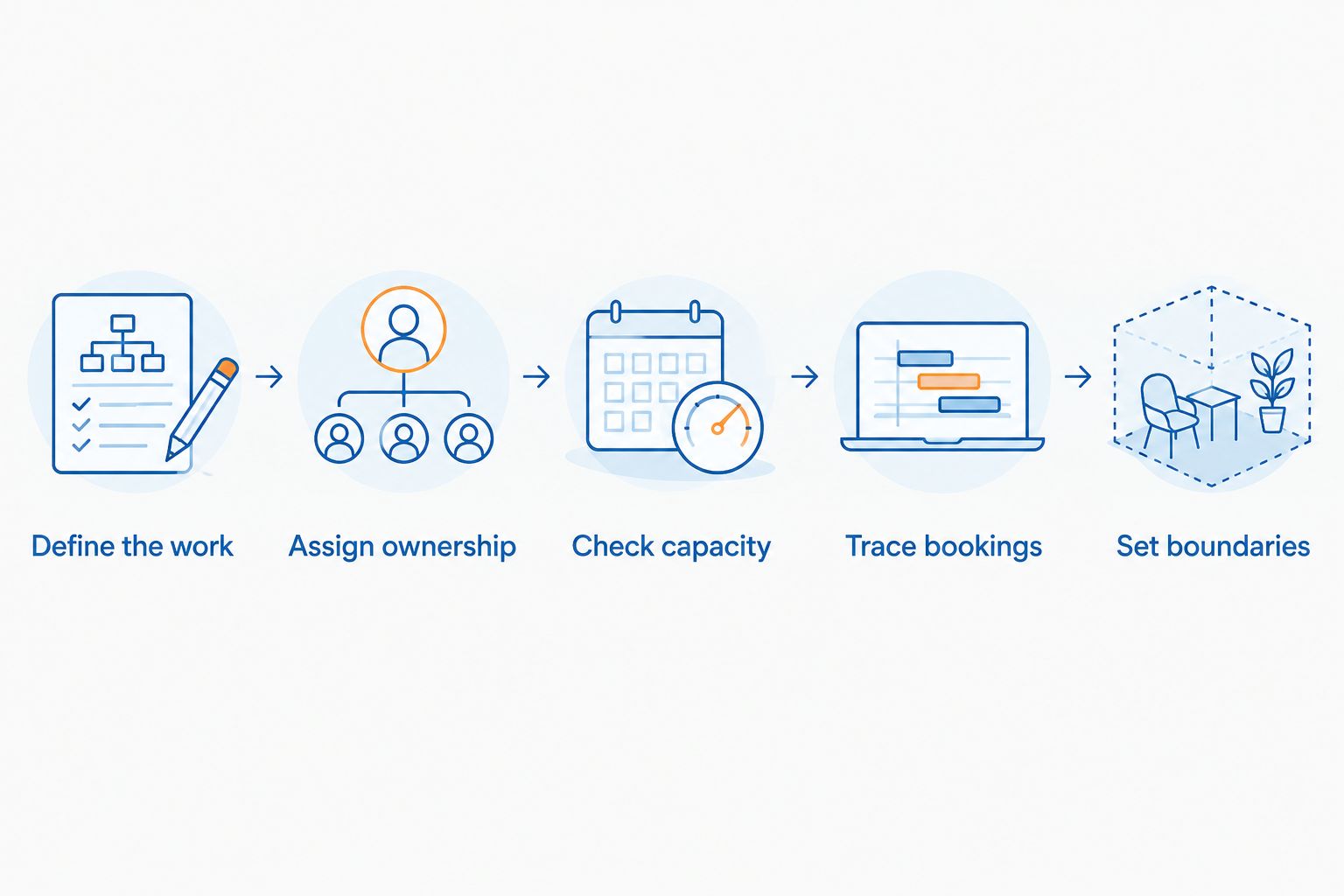
Choose support after checking where responsibility or delivery breaks down.
Hire a business coach first when owner dependence is the blockage
Choose coaching first when more enquiries would increase your personal workload because the team lacks clear responsibilities or decision authority. Ask for work that changes how the business operates, rather than a list of ideas to implement later.
Useful coaching priorities include:
- Defining which decisions a team member can make without approval.
- Documenting how enquiries become quotes and confirmed bookings.
- Clarifying service scope so the team can recognise unsuitable work.
- Connecting the marketing plan to available delivery capacity.
- Assigning responsibility for implementation and reviewing what changed.
The advantage is a connected view of the business. The trade-off is that coaching still requires your team's participation. A coach cannot make delegation work if you continue taking decisions back or leave agreed changes unfinished.
For your 2026 plan, ask what your team will do differently before advertising starts. An answer about responsibilities, handovers and measurement is more useful than a promise of growth.
Start paid ads first when the operating basics are working
Choose advertising support first when your offer is clear, follow-up has an owner and your team can deliver the work you want to attract. Coaching is not a compulsory step before buying ads.
You should be able to explain the target customer, service area, qualification criteria and available capacity to whoever manages the campaign. You should also know who will respond when an enquiry arrives and how the outcome will be recorded.
The advantage is focus. You can address a demand problem without turning it into a wider business project. The limitation is scope: advertising support does not automatically include pricing decisions, team management or delivery redesign.
Brief against suitable bookings, not enquiry volume alone. A campaign that attracts requests you cannot serve needs a different response from one that attracts suitable requests your team fails to follow up.
Prepare internally when the fix is already clear
Fix the process internally when you know what is wrong and have someone with the authority and time to change it. Outside support is not automatically the best answer to an unfinished task.
For example, if enquiries sit unassigned, appoint an owner and document the handover. If every quote needs your approval, identify which decisions can move to a trained team member and which genuinely need escalation.
Internal preparation keeps responsibility with the people doing the work. Its limitation is competing priorities: an agreed change still needs protected time and a review point.
Bring in coaching when the team cannot agree on priorities, responsibilities remain unclear or the same implementation problem keeps returning. Do not buy another plan when the immediate need is to finish an existing decision.
Why the right order varies
The right sequence for 2026 depends on where work gets stuck, not on a rule that every business must complete coaching before advertising.
- Owner dependence: If routine decisions return to you, establish authority and escalation rules first.
- Offer clarity: If your team cannot explain suitable work, clarify the service before promoting it.
- Lead handling: If enquiries arrive but follow-up is inconsistent, fix ownership before increasing volume.
- Delivery capacity: If the team cannot fulfil additional bookings, resolve capacity or narrow the promoted service.
- Measurement: If you cannot connect enquiries with completed work, establish that record before judging campaign quality.
- Implementation capacity: If nobody can act on recommendations, define who will make changes before hiring support.
These factors also explain why advice from another business owner is not enough. A recommendation that suited their staffing, service mix and responsibilities does not establish what your business needs.
How do you choose a coach for this stage?
Ask prospective coaches to explain how they would separate a marketing problem from an operational problem. Then ask who does the implementation. Keep the conversation tied to your actual enquiry and delivery process.
Request a clear scope covering the decisions to address, the work your team must complete and how progress will be reviewed. Ask how the coach handles a situation where the business needs fewer unsuitable enquiries rather than more total enquiries.
Elevatory's business coaching combines coaching with done-with-you marketing implementation for established Australian businesses. That is relevant if you need help putting offer, funnel, advertising and systems decisions into practice. It still requires participation from your business; it is not a substitute for assigning internal ownership.
Look for examples relevant to your business model. An ecommerce sales result does not establish that a coach has solved delegation or booking capacity for a service business. Ask what changed operationally, not just what appeared in a headline.
Review your next growth priority
Explore business coaching and done-with-you marketing implementation for established Australian businesses.
What should be in your brief before paid ads start?
Your 2026 brief should connect the promise made in the ad with the person responsible for delivering it. Keep it practical enough that your team can use it during a busy day.
Document these 2 handovers:
- Enquiry to booking: Record the qualification questions, responsible person, next action and escalation rules.
- Booking to delivery: Record the agreed scope, customer commitments, delivery owner and information the team needs.
Include what a suitable booking looks like and which outcomes you will review. Keep enquiry quality separate from response quality: poor follow-up and poor targeting require different corrections.
Before launch, walk a hypothetical enquiry through the process with your team. If nobody knows who acts next, resolve that uncertainty before paying to create more of it.
Can I start paid ads while working with a business coach?
Yes, you can run paid ads alongside coaching when someone owns enquiry handling and your team has capacity for the promoted work. Keep the responsibilities connected so the campaign does not promise something the delivery team cannot fulfil.
What if I already get enquiries but need more profitable bookings?
Examine qualification, scope, quoting and follow-up before assuming you need more enquiries. Identify where suitable opportunities stop becoming profitable work, then choose support for that specific problem.
FAQ
Should you hire a business coach before paid ads?
Yes, if unclear responsibilities, owner dependence or delivery problems prevent your team handling more work. If your offer, follow-up and capacity are ready, advertising support can be the more direct next step.
Do I need business coaching before running Google Ads?
No, business coaching is not a required step before running Google Ads. Choose it when the business needs help with priorities, delegation or implementation, rather than campaign management alone.
What's the best support if every enquiry comes back to me?
Business coaching is relevant when you need to delegate enquiry handling and define decision authority. Start by naming who qualifies requests, who prepares quotes and which exceptions need your approval.
Is a business coach better than an advertising specialist?
Neither is better for every situation; they address different problems. Choose coaching for business priorities and operating responsibilities, and advertising support for attracting and measuring suitable enquiries.
Can paid ads fix a quiet service business?
Paid ads can help you seek enquiries, but they do not fix unclear service scope, missed follow-up or limited delivery capacity. Check those conditions before treating advertising as the complete answer.
Does Elevatory provide coaching or done-for-you advertising?
Elevatory provides business coaching with done-with-you marketing implementation. Its stated work includes offers, funnels, paid advertising and systems strategy, rather than positioning itself as a done-for-you advertising service.
How do I know whether coaching is helping before ads launch?
Look for completed operational changes, such as delegated decisions, a documented enquiry handover and a clear capacity-based advertising brief. These changes provide a practical basis for deciding whether the business is ready to launch.
One last thing
Before paying for another enquiry, remove an unnecessary owner approval. Choose a routine decision, give a capable team member clear boundaries and agree when escalation is needed.
That exercise tests something an advertising dashboard cannot: whether your business can accept more work without making you the compulsory next step. Use the answer to choose your support.
Related guides
Book a free growth strategy call
Forty-five minutes with a strategist to pressure-test where your business is stuck and what to prioritise next.
Prefer to talk first? Call 1300 634 230 or email chris@elevatory.com.au