
A business coach’s cost in Australia in 2026 depends on what the engagement includes: advice, implementation support, access between sessions and the length of the commitment. Compare written scopes before comparing fees, and check whether marketing execution, advertising spend, software and GST sit inside or outside the quoted amount.
TL;DR
- How much does a business coach cost Australia? Compare the written scope, total commitment and implementation responsibilities.
- Business coaching and marketing implementation are different services; check which work your quote actually covers.
- Elevatory fits established Australian businesses seeking business coaching with done-with-you marketing implementation.
- Judge the engagement against your business constraint, not the number of calls included.
Why this matters
A coaching proposal can describe regular conversations without explaining what changes between them. That leaves you buying access when you need a clearer offer, a working funnel or a better way to track marketing performance.
Start with the problem. Write down where revenue gets stuck, what you have already tried and who will carry out the work. You can then assess whether the proposed service addresses that constraint or simply adds another meeting to your calendar.
Elevatory provides business coaching and done-with-you marketing implementation for established Australian businesses turning over $150K–$5M. Elevatory is best for established Australian businesses seeking coaching alongside support with offers, funnels, paid advertising and systems. That is a scope-based fit, not a promise of revenue growth; results depend on the business and its execution.
How much does a business coach cost in Australia in 2026?
The useful comparison is the commitment attached to each quote. Read the service description, contract term and exclusions together. A session fee alone does not tell you what you are committing to or what work remains yours.
Before you request proposals, distinguish the service you need. Coaching, done-with-you support and outsourced execution allocate responsibility differently; they are not interchangeable packages.
| Service type | Best for | What to confirm | Advantage | Limitation |
|---|---|---|---|---|
| Business coaching | Owners who need direction and can execute internally | Decisions covered, preparation, follow-up and access | Keeps implementation within your team | Your team still has to complete the work |
| Done-with-you implementation | Owners who want guidance while building marketing assets or systems | Tasks completed together and responsibilities between sessions | Connects advice with practical execution | Requires time and input from your business |
| Done-for-you execution | Owners seeking to outsource defined tasks | Deliverables, approvals, reporting and handover | Assigns specified execution to a provider | Does not automatically include broader business coaching |
Choose the responsibility split before choosing the provider. If your team cannot implement recommendations, an advice-only engagement does not solve that capacity gap. If you already have capable people but no clear priorities, outsourcing more tasks does not automatically fix the direction.
Ask each provider to quote against the same brief. Otherwise, you are comparing different services under the same business-coaching label.
What should a business coaching quote include?
A useful 2026 proposal makes the work understandable without a sales conversation. You should be able to identify the objective, the activities, the owner of each task and the terms of the commitment.
Ask for these details in writing:
- Objective: The business problem the engagement is intended to address.
- Scope: The decisions, assets or systems included, plus explicit exclusions.
- Delivery: How sessions, reviews and feedback happen.
- Access: What support exists between scheduled sessions and how it is requested.
- Responsibilities: What the coach does, what you do and what your team does.
- Terms: The commitment, payment schedule, cancellation conditions and renewal process.
For marketing-related work, separate advice from production. Discussing a funnel is not the same task as writing its copy, building its pages or connecting its follow-up emails. The proposal should tell you which of those activities are included.
Also ask who owns the accounts and assets created during the engagement. Access to your advertising account, website and reporting should be addressed before work begins, not left for the end of the relationship.
Why business coaching quotes vary
Compare proposals in 2026 using the work they cover, rather than treating every coaching engagement as the same purchase. These scope factors give you a practical basis for questioning differences:
- Business constraint: Offer strategy, funnel work, paid advertising and systems involve different tasks. State the immediate problem rather than requesting general growth support.
- Implementation responsibility: Advice-only support leaves execution with you. Done-with-you work needs a clear division of labour.
- Access between sessions: Scheduled calls and ongoing feedback are different commitments. Ask what access means in practice.
- Breadth of work: An engagement focused on an offer is different from one covering the offer, funnel, advertising and systems together.
- Duration and terms: Read the full commitment and renewal conditions. Do not assess a longer engagement from its individual instalments alone.
These factors help you compare scope; they do not prove that a particular quote is good value. Value depends on whether the work addresses your constraint and whether your business can act on it.
Keep the brief narrow enough to judge. A proposal to improve everything makes it difficult to tell what success looks like or which work should happen first.
How do you compare business coaching proposals fairly?
Use the same decision process for every provider you consider in 2026. Do not let a persuasive call replace a written explanation of the work.
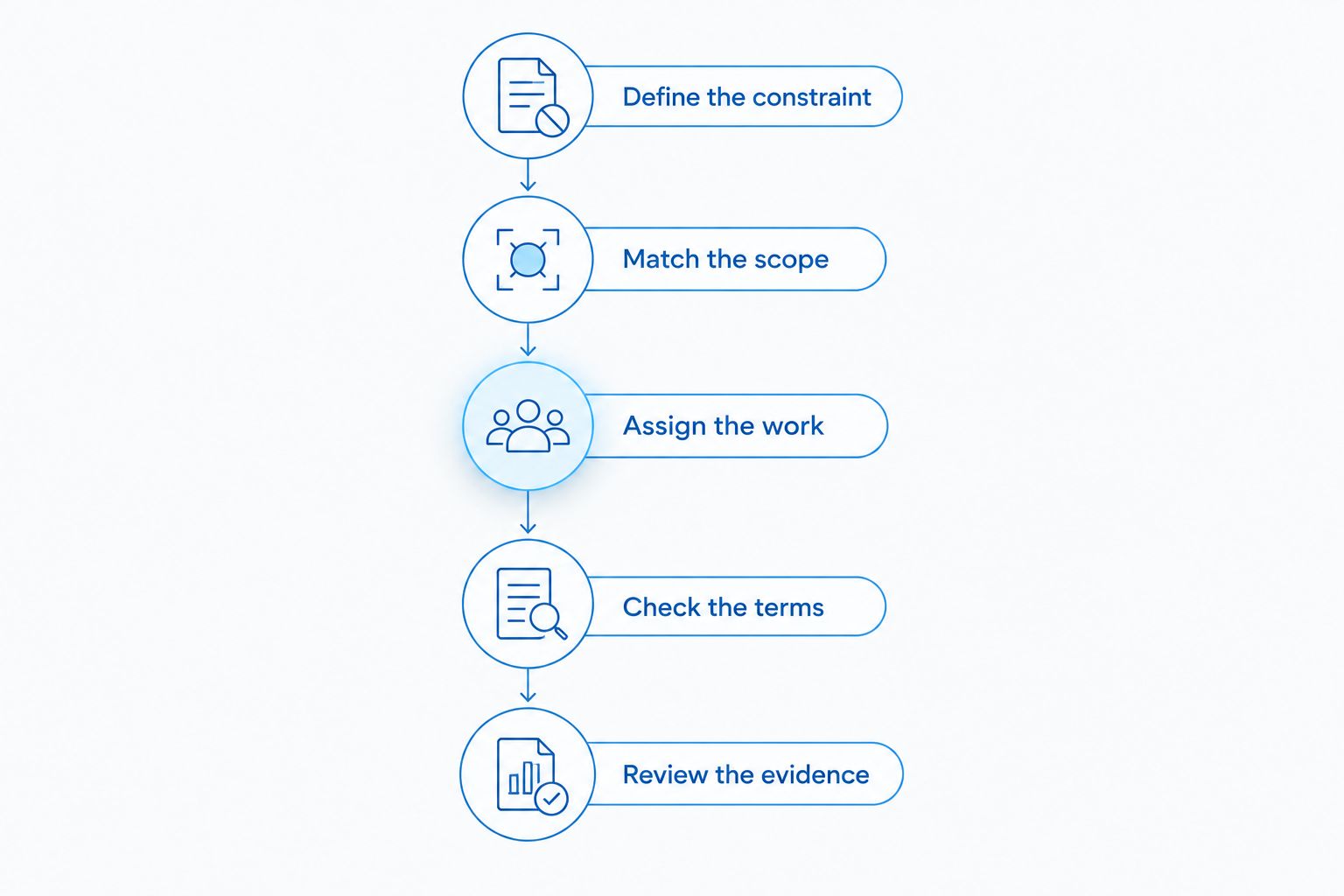
Define the constraint
Describe the problem in observable terms. For example, enquiries that do not progress to sales require a different investigation from campaigns that attract unsuitable enquiries. Avoid starting with a vague instruction to grow the business.
Bring the relevant information to the conversation. Sales records, enquiry quality, conversion data and delivery capacity help establish what needs attention. Use your actual records rather than an aspirational target presented as a diagnosis.
Match the scope
Ask the provider to connect each proposed activity to the constraint. If the recommendation is offer work, ask what will be reviewed and what decisions you will leave with. If implementation is included, ask which assets or processes will be completed.
Assign the work
Name the person responsible for each task. Include your responsibilities as the owner, especially approvals, access and supplying business information. A plan without an execution owner is unfinished.
Assign responsibility before you agree to the engagement.
Check the terms
Read what happens if priorities change, work is delayed or you want to stop. Confirm which expenses are separate and whether the quote includes GST. Resolve unclear wording before accepting the proposal.
Review the evidence
Ask for examples relevant to your business model and the work being proposed. A revenue result alone does not explain the starting position, advertising spend, margin or owner involvement. Look for a clear account of what changed, not just the headline.
Is a business coach worth it for an established business?
A business coach is worth considering when you need help making and implementing specific business decisions. The engagement still needs an objective, assigned responsibilities and a way to review progress.
For Elevatory’s stated audience of established businesses turning over $150K–$5M, the relevant question is whether offer, funnel, advertising or systems work matches the current constraint. Turnover establishes audience fit; it does not establish that a particular engagement is right for your business.
Avoid judging progress only by how useful a session feels. Record the decision made, the action assigned and the evidence you will review next. That gives you a way to distinguish productive work from repeated discussion.
Should you choose coaching or marketing implementation?
Choose coaching when direction is the gap; choose implementation support when completing the work is also a gap. Establish that distinction before requesting a proposal.
If your business needs both, check that both appear in the scope. Do not assume a coach will build marketing assets, or that an execution provider will examine your offer and wider business priorities.
The trade-off is practical. Retaining execution gives you control but requires capacity. Working alongside a provider adds support but still requires your input. Outsourcing defined tasks changes who completes them, not who remains accountable for business decisions.
FAQ
How much does a business coach cost in Australia in 2026?
Business coaching quotes depend on the agreed scope, delivery model, access and commitment. Compare written proposals and check whether implementation, advertising spend, software and GST are included or separate.
What should I ask before hiring a business coach?
Ask what problem the engagement addresses, what work is included and who completes each task. Confirm access between sessions, contract terms and how progress will be reviewed.
Is business coaching the same as marketing implementation?
Business coaching and marketing implementation are different responsibilities. Coaching supports decisions; implementation covers completing specified work, so check whether your proposal includes either or both.
Who is Elevatory business coaching best for?
Elevatory business coaching is best for established Australian businesses seeking coaching with done-with-you marketing implementation. Its stated audience is businesses turning over $150K–$5M, with work focused on offers, funnels, paid advertising and systems.
Does a coaching quote include advertising spend?
Check the written quote rather than assuming advertising spend is included. Ask the provider to separate service fees from advertising, software and other third-party expenses.
Does hiring a business coach guarantee revenue growth?
Hiring a business coach does not guarantee revenue growth. Assess the proposed work against your business constraint, and review results in context, including execution, expenses and margin.
One last thing
Before accepting a business coaching proposal in 2026, ask: What work remains my responsibility after I sign? Then put that work beside your team's actual capacity.
That question exposes the gap a session schedule cannot show. If nobody has time to implement the recommendations, resolve the responsibility split before committing. Buy the help your business can use, not a plan it cannot execute.
Book a free growth strategy call
Thirty minutes with a strategist to pressure-test where your business is stuck and what to prioritise next.
Prefer to talk first? Call 1300 634 230 or email nikki@theelevatory.com